

Modeling and Validation of AI-Driven Computational Load
From lab to grid: Modeling and Validation of AI-Driven Computational Load
Challenge
AI-driven load introduces layered risks that current interconnection processes do not consistently capture. At the facility level: harmonic disturbances, UPS degradation, flicker, and elevated cooling load. At the grid level: voltage flicker, frequency variation, reduced oscillatory damping, and sub-synchronous interactions with generators and inverter-based resources. On May 4, 2026, NERC issued a rare Level 3 “Essential Actions” Alert directing immediate steps to address the reliability risks of large computational loads — with affected entities required to report on their progress by August 3, 2026. Alongside it, NERC has proposed new registration criteria for a “Computational Load Entity” (CLE), formalizing plans to create performance requirements that data centers and utilities must prepare for now.
Approach
Deploy an integrated end-to-end modeling and verification workflow across three sequential stages:
- Data Center Modeling
- Develop control-focused models
- Simulate AI load dynamics, grid interactions, and disturbances
- Lab Testing
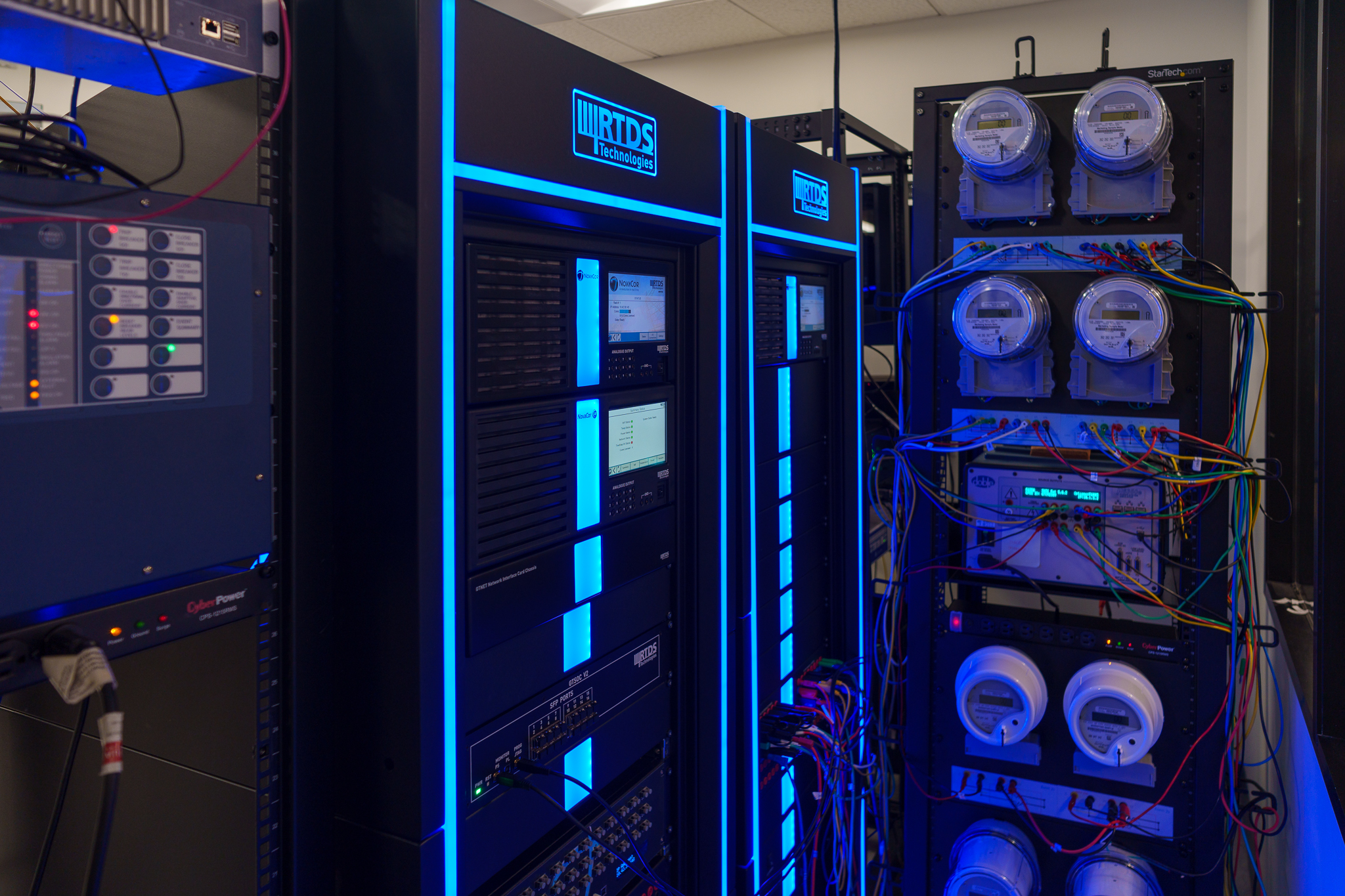
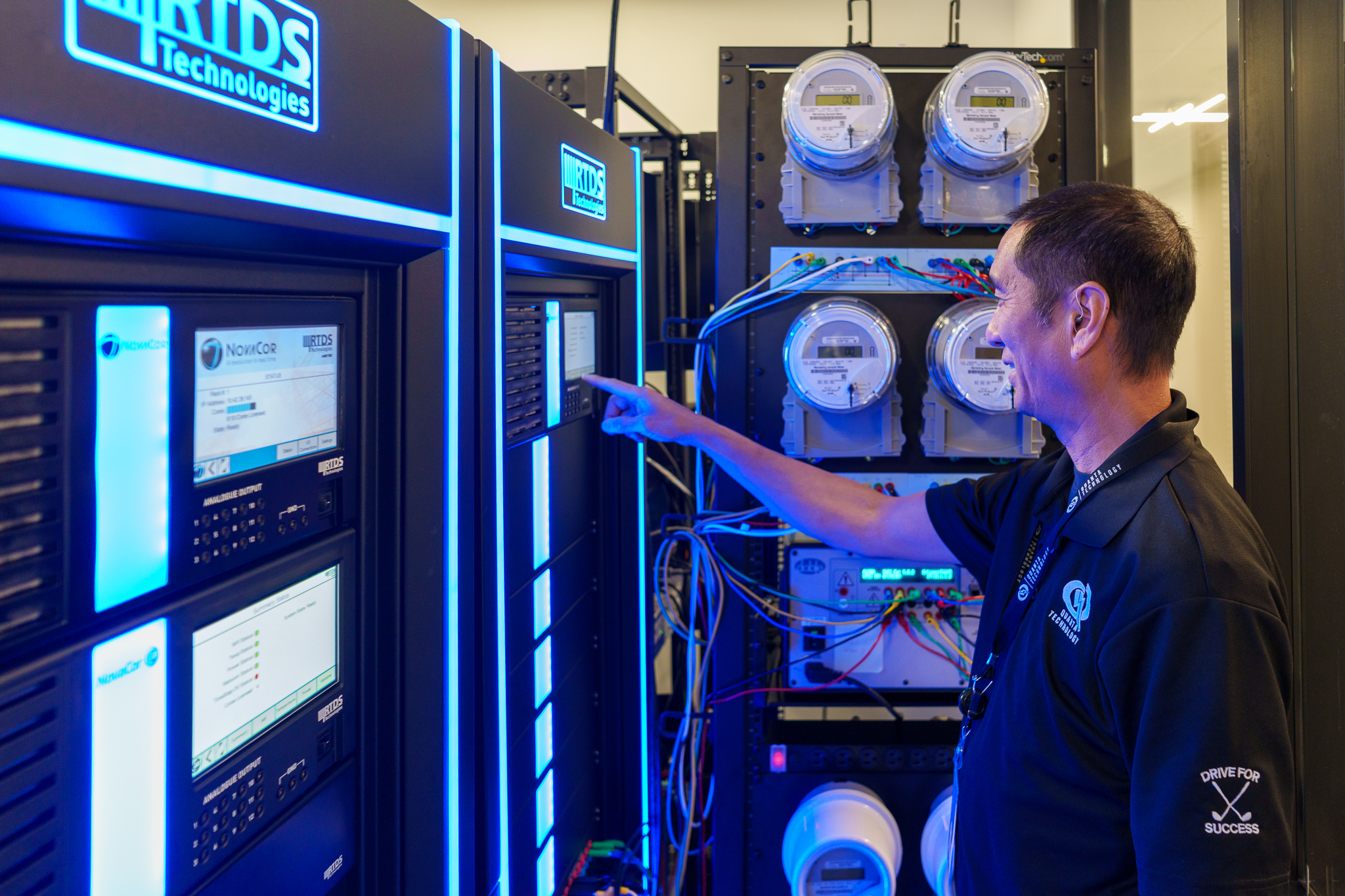
- Perform power and control HIL lab testing
- Verify protection, ride-through, control, and transient performance
- Model Validation
- Calibrate models using HIL results
- Develop validation reports
- Reduce commissioning risk
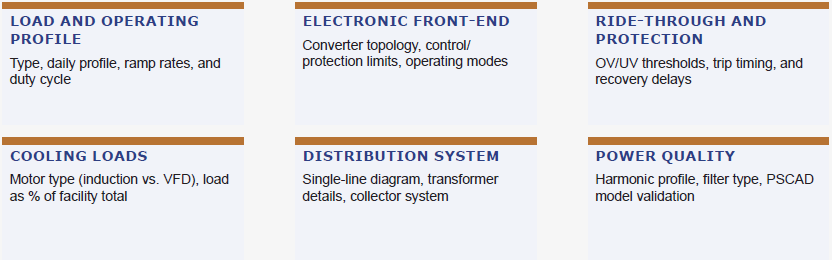
Accurate modeling requires detailed characterization across six data domains, shown on the right.
Results
- Developed control-focused models and simulated AI load dynamics, grid interactions, and disturbance scenarios.
- Performed HIL lab testing to verify protection, control, and transient performance prior to commissioning.
- Calibrated models against test results and produced validation reports.
- Established a repeatable end-to-end workflow supporting defensible interconnection review and NERC compliance readiness.
Contact us to learn more about Modeling and Validation of AI-Driven Computational Load